|
Sat11 Apr09:00am(15 mins)
|
Where:
Teaching and Learning M209
Presenter:
|
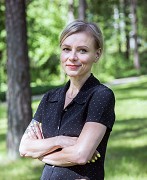
This presentation examines how Russian scholars conceptualize civil-military relations, what they study within the discipline, and how these understandings have evolved during the Russo-Ukrainian War (2014–2025). Drawing on Russian-language academic publications, the study traces the discipline’s trajectory from its earlier reliance on Western democratic principles—such as civilian control over the armed forces and the role of military autonomy in fostering professionalism—toward increasingly politicized and ideologically framed interpretations.
Recent developments—including the reintroduction of military-political education and political commissars in the armed forces, the Wagner mutiny, and the dismissal of senior officers as well as civilian leaders within the Ministry of Defence—signal deep fractures in Russia’s civil-military arrangements. These shifts have unfolded against the backdrop of intensifying authoritarian forms of governmentality. Within this context, the social sciences and humanities, including military sociology and related fields, have undergone a process of “nationalization”: academic freedom has eroded, opportunities for “unpatriotic” scholars have narrowed, and legislation criminalizing the “discrediting” of the armed forces has effectively curtailed critical inquiry.
The study employs an integrative literature review and situates the findings within central theories of civil-military relations. AI-based data-analytic tools are used to examine the extensive body of Russian research material.