|
Sun12 Apr02:00pm(15 mins)
|
Where:
Muirhead Tower 112
Presenter:
Presenter:
|
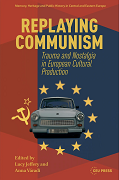
Repercussions of communism are still felt throughout Central and Eastern Europe. In fact, specters of communism remain vivid enough to inspire a range of contemporary cultural production, from video games to museum exhibits. By detailing how twenty-first-century cultural productions re-engage the communist past, this paper argues that the impact of this past is seen as fundamental to understanding and shaping CEE identities. Specifically, we explain that a ‘trauma/nostalgia paradigm’ emerges in cultural representations of the communist era. Developing van Liere and Sremac’s recent work (2024), nostalgia and trauma are understood as coexisting forces that shape contemporary engagement with the challenges associated with life under a communist regime. Hence, our paper posits that trauma and nostalgia form an interplay within the de- and re-construction of post-communist European identities, both collective and individual. We discuss examples of this interplay with specific reference to how, in several contemporary cultural productions from across CEE, memories of trauma steer nostalgia, even becoming part of it, and vice versa. As such, the arts are understood as, foremost, vehicles of memory, political historicization, and recontextualization.
The analysis of cultural production concerning communism enables us to understand how preparations to forge democratic futures during and after the transition away from communism have seen successes (widespread membership of former communist countries to the EU and NATO) and failures (rise of authoritarian leadership across CEE). By addressing how post-communist societies deal with their difficult pasts, specifically communist dictatorships, during our present ‘moment of danger’ when neo- and post-fascist movements are taking hold, this paper contributes both an epistemological understanding of and the tools required to deconstruct the trauma/nostalgia paradigm—a phenomenon that is played out in contemporary political and cultural spaces in a manner which, we argue, reflects each post-communist nation’s unique challenges with political stability and democracy since 1989.
References
van Liere and Sremac eds., Trauma and Nostalgia: Practices in Memory and Identity (Amsterdam University Press, 2024), 27.
Levi and Rothberg, “Memory studies in a moment of danger: Fascism, postfascism, and the contemporary political imaginary,” Memory Studies 11, no. 3 (2018).